Manual.ly Logo

HJC CS-15 Dosta Manual

0,0 · 0 Valoraciones

Manual en PDF · 19 Páginas

Español

M: QW-35-FL
página

/ 19

Loading...
481aa955fbdd7d8c950f542c35c469aa55de page 2
English P. 1-6 Français
P. 7-12 Deutsch P. 13-18
Español P. 19-24 Italian P. 25-30 Dutch P. 31-36
Contents
Important Safety Information
Specifications
Selecting the Right Helmet
Using Your Helmet Correctly
Inspect your helmet
To ensure that your helmet is in the best condition to maximize your protection, always inspect your helmet for damage
before riding :
• Check
the shield and shield ratchet – re-tighten shield ratchet screws if necessary. Be sure not to over-tighten any
screws. Plastic base plate screws can break and plastic screws can strip the screw sleeves if over-tightened.
• C
heck
for helmet damage. If your helmet is damaged or cracked, stop using it immediately. See “Helmet Replacement” (p. 6)
section for further information. If your helmet has been dropped, you may not be able to see the damage.
• C
heck for worn or damaged parts.
Plastic components may wear out over time. If you find worn or damaged parts, replace them
or purchase a new helmet. See “Replacement Parts” (p. 6) for information on parts replacement.
Check Your Face Shield
If your face shield is scratched or damaged it may reduce the visibility-replace if necessary.
Always make sure you can see well enough to safely operate your motorcycle.
Fasten the Retention System
Fasten the retention system (chin strap) as tight as possible under your jaw without causing pain. There must be no slack in the
strap, and the strap must be snug up against your jaw. If the retention system is not tight, your helmet may become dislodged or
knocked off in an accident.
The instructions in this manual are designed to help you select the right helmet, wear it properly, take care of it, and know when
to replace it. Failure to follow these instruction may increase your risk of serious injury or death in an accident.
In order to get the most protection possible from your helmet, you should always do the following:
• Wear your helmet when you ride;
• Handle your helmet carefully to avoid accidental damage; and
• Ride safely – do not take risks because you are wearing a helmet.
Although your HJC helmet is designed to reduce or prevent some injuries when worn, no helmet can protect you from all possible or
foreseeable impacts. For example, your helmet cannot protect you from spinal or neck injuries. In addition, there is no guarantee that your
helmet will PREVENT injuries to the area of your head that is covered. A low speed accident may even result in serious injury or death.
Never buy a used helmet or borrow someone else’s helmet. Over time the protective foam in helmets will adjust
to the contours of a user’s head. A used or borrowed helmet may not offer as much protection as a new helmet.
Wearing the wrong size helmet can increase your risk of serious injury or death in an accident. A helmet that is
too large for your head may be dislodged or knocked off in an accident. To select the right size helmet for your
head, follow these instruction :
The size chart is only for reference. Always
try the helmet on and follow this manual's
instructions for a proper fit.
Always make sure you can see well enough to safely operate your motorcycle.
To reduce the risk of serious injury or death, always use your helmet correctly.
If parts fall off while riding, your vision may be blocked which could cause an accident.
• Check the retention system (chin strap) for damage. If it is frayed or ripped, replace the helmet.
• Check that all pads are in place. Both of the cheek pads and the crown pads must be in place.
If helmet comes off or shifts over your eyes, try another size or another model or brand. You must be able
to see the edge in your upper field of vision.
Size Chart
1. Measure your head. Wrap a tape measure around your head about one inch (2.5cm) above your eyebrows.
2.
Use the sizing chart to select the helmet size that corresponds most closely to your head measurement. If your head
size falls between two helmet sizes, try on the larger helmet first and then the smaller size.
6.
Test the helmet fit by placing your hands on each side of the helmet. While holding your head as motionless
as possible, try rotating your helmet from left to right then up and down. If you can feel the helmet padding
sliding on your head, it is too big, try a size smaller. You should feel the helmet move the skin on your
head and face as you try to move the helmet.
7. F
asten the retention system (chin strap) as tight as possible under your jaw without causing pain. There must be no slack
in the strap, and the strap must be tight up against your jaw. See page 2-3.
3.
Try on the helmet by grasping both chin straps to pull the helmet completely onto your head, ensuring that the top of your head
is in contact with the top of the helmet interior.
4.
Check for a proper fit. To make sure your helmet is the right size, check that :
• The helmet inner lining fits snugly around your head.
• The top pad presses firmly on your head.
• The cheek pads contact your cheeks.
• There is no space around your brow under the inner lining. Test this by trying to insert your fingers.
If the helmet does not fit snugly, try on a smaller size.
5.
Check your field of vision when trying on a helmet. Some helmets may obstruct or block your vision when looking left, right, up, or down.
8.
Test the retention system (chin strap)
• Put your hands on the back of the helmet and try to push the helmet off by rotating it forward.
• Put your hands on the front of the helmet above your forehead (or on the chin guard) and try to push
the helmet off by rotating backward.
Repeat steps 3 throught 8 until you find a helmet that fits your head snugly and securely.
1. Outer Shell
2. Rear Venturi Exhausts
3. Impact Absorbent Liner
4. Comfort Liner
5. Rubber Edge Trim
6. Chin Strap
7. Micro Buckle
8. Front Chin Vent
9. Eyeport Gasket
10. Breath Deflector
11. Tool-less Shield
12. Shield Retention Button
13. Shield Ratchet
14. Top Front Vent
CLOSE
CLOSE
OPEN
OPEN
CLOSE
CLOSE
OPEN
OPEN
To reduce the risk of serious injury or death and to help prevent damage to your helmet :
• Never adjust your helmet accessories while riding – Only make helmet adjustments when stopped.
• Never
drop your helmet – Dropping your helmet may crack the shell or damage the protective foam. The damage may
not be visible. Your helmet is only designed for ONE impact. Refer to “Helmet Replacement” (p. 6) for more information on
what
to do
after helmet has been dropped.
• Never wear anything between your head and your helmet – this may reduce the effectiveness of your helmet.
• Never
hang or hook your helmet on anything including mirror stalks or sissy bars - Doing so may cause damage
to the helmet protective foam or liner.
• Never use
insect repellent on or around your helmet – insect repellant may damage your helmet’s shield, shell, protective
foam, or other components.
• Never
expose helmet to gasoline or gasoline fumes – Gasoline may damage your helmet’s shield, shell, protective
foam, or other components.
• Never use a dark or tinted face shield at night or in low visibility conditions.
- If you have any questions on what other substances may damage your helmet, please contact us.
• Always
wear eye protection – If you are not using a helmet with a face shield, always wear eye protection when riding.
Always lock your face shield in place when you are riding.
• Always
be alert for sounds – Your helmet may impair your hearing. However, your helmet is not a form of hearing protection.
• Always store your helmet in its helmet bag when not in use to help reduce accidental surface damage.
1 2

Chatee con su manual de HJC CS-15 Dosta usando IA

Obtenga respuestas instantáneas de IA de su manual de HJC CS-15 Dosta

Pregunte lo que quiera sobre HJC CS-15 Dosta. Las respuestas provienen de este manual, con las páginas en las que se basan.

CS-15 Dosta Programa de mantenimiento

Recuérdame cuándo corresponde realizar el mantenimiento
Cada 3-5 años
Reemplazar casco

Reemplace el casco cada 3 a 5 años debido a la exposición a los rayos UV y al envejecimiento de los componentes, incluso si no hay daños visibles.

Mostrar en el manual (página 4)
Antes de cada trayecto
Inspeccionar el casco por daños

Verifique la tensión del cierre de la visera, busque grietas en la carcasa o partes desgastadas, y asegúrese de que el sistema de retención esté seguro antes de conducir.

Mostrar en el manual (página 2)
Regularmente
Limpiar las almohadillas extraíbles

Lave a máquina las almohadillas extraíbles de mejilla y corona con jabón suave y séquelas al aire para eliminar la acumulación de sudor y suciedad.

Mostrar en el manual (página 3)
Según sea necesario
Limpiar las ventilaciones con aire comprimido

Use latas de aire comprimido para soplar los restos del sistema de ventilación después de retirar las almohadillas interiores.

Mostrar en el manual (página 3)

Recordatorios de mantenimiento gratuitos

Según la fecha de compra. Siempre gratis, cancela la suscripción cuando quieras.

Al enviar, aceptas la política de privacidad. Cancela la suscripción con un clic en cualquier correo electrónico.
M: qwen/qwen3.8-flash

Haz una Pregunta

0/1000

¿Recomiendas CS-15 Dosta?

Sí No

Preguntas frecuentes

A

Use agua tibia y jabón suave. No use compuestos abrasivos ni presión excesiva, ya que esto puede crear un efecto brillante que arruina la apariencia mate.

¿Esta respuesta fue útil?

A

No, modificar el casco taladrando, cortando o pintando aumenta el riesgo de lesiones. Las modificaciones anulan la garantía y comprometen la integridad estructural.

¿Esta respuesta fue útil?

A

Reemplace su casco cada 3 a 5 años debido al envejecimiento de los materiales. También reemplácelo inmediatamente después de cualquier impacto, incluso si no hay daños visibles.

¿Esta respuesta fue útil?

A

Sí, el HJC CS-15 cuenta con un mecanismo de escudo sin herramientas que permite una fácil extracción e instalación sin necesidad de herramientas adicionales.

¿Esta respuesta fue útil?

A

Evite repelentes de insectos, gasolina y vapores de gasolina. Estos químicos pueden dañar el escudo, la carcasa y el revestimiento protector de espuma.

¿Esta respuesta fue útil?

M: QW-35-FL

Ventajas y Desventajas

Ventajas

  • Cumple con los estándares de seguridad ECE R 22-05 para una protección de alto nivel
  • El sistema de escudo sin herramientas permite ajustes rápidos y fáciles
  • La microhebilla asegura un ajuste seguro y cómodo de la correa de la barbilla
  • Las almohadillas laterales extraíbles y lavables mantienen la higiene y la comodidad
  • Diseño aerodinámico con ventilación frontal y trasera efectiva
VS

Desventajas

  • El diseño de cara abierta ofrece menos cobertura que los cascos de cara completa
  • El acabado mate requiere métodos de limpieza específicos para evitar el brillo
  • No incluye visor solar integrado en el modelo base
  • Las piezas de repuesto deben ser genuinas de HJC para mantener la garantía
  • El casco debe reemplazarse cada 3-5 años independientemente de su condición
M: QW-35-FL

Producto Especificación

Tipo

Casco integral

M: QW-35-FL

Producto Descripción

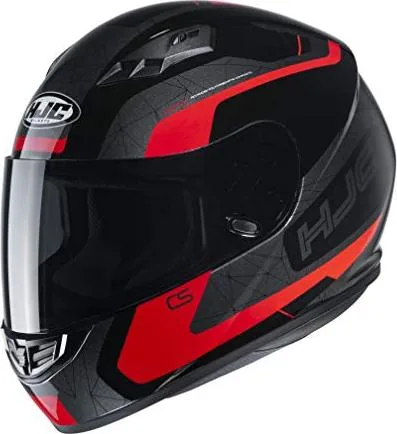
Descubre el casco HJC CS-15 Dosta MC1

El casco HJC CS-15 Dosta MC1 en un llamativo esquema de colores negro y rojo es un casco abierto versátil diseñado para pilotos que valoran tanto el estilo como la seguridad. Este modelo cuenta con una carcasa aerodinámica y elegante que reduce el ruido del viento mientras proporciona una excelente protección en la carretera. El distintivo gráfico MC1 añade un toque moderno al diseño clásico de casco abierto, convirtiéndolo en un favorito entre los conductores urbanos y los viajeros de fin de semana.

La seguridad está en el núcleo de la construcción de este casco. Cumple con los rigurosos estándares ECE R 22-05, asegurando una absorción fiable de impactos. El sistema de retención de microhebilla permite un ajuste rápido y seguro bajo la barbilla, asegurando que el casco se mantenga firmemente en su lugar incluso durante maniobras repentinas. El escudo facial no requiere herramientas, lo que permite ajustes o reemplazos fáciles sin necesidad de equipo adicional. La ventilación adecuada se gestiona a través de las tomas de aire delanteras en la barbilla y las salidas traseras, manteniendo al piloto fresco y cómodo durante viajes largos.

La comodidad se ve mejorada por el forro interior suave y las almohadillas laterales extraíbles, que se pueden lavar para mantener la higiene. La almohadilla de la corona también es ajustable y extraíble, permitiendo un ajuste personalizado. Los pilotos siempre deben asegurarse de que el casco se ajuste bien alrededor de la cabeza y las mejillas sin causar puntos de presión. Un ajuste adecuado es crucial para la máxima seguridad; si el casco se desliza fácilmente u obstruye la visión, se debe probar inmediatamente un tamaño diferente.

Mantener su HJC CS-15 implica una limpieza regular con productos aprobados. Para acabados brillantes, se recomiendan limpiadores automotrices, mientras que los acabados mate requieren agua tibia y jabón suave para preservar la textura. Evite usar repelentes de insectos o gasolina cerca del casco, ya que estas sustancias pueden dañar la carcasa y el visor. Siempre guarde el casco en su bolsa cuando no lo use para protegerlo del polvo y de arañazos accidentales.

Recuerde que los cascos tienen una vida útil. Incluso sin daños visibles, es recomendable reemplazar su casco cada tres a cinco años debido a la degradación del material por la exposición a los rayos UV y el sudor. Nunca modifique la estructura del casco, ya que esto compromete su integridad de seguridad. Ya sea que elija la combinación negro/roja u otra variante, el HJC CS-15 ofrece una mezcla de rendimiento y estética adecuada para varios estilos de conducción.

M: QW-35-FL

© Copyright 2026 Manual.ly